Tooth numbering chart for adults and kids
Tooth numbering chart codes give every tooth a short label, so you and your dentist can point to the same tooth.
Tap a tooth to see its FDI, Universal and Palmer numbers.
Upper teeth on the top row, lower teeth below, seen as the dentist sees them. Arrow keys move, Enter picks.
Nothing you type leaves this page. The tool runs in your browser and stores nothing.
Press New question to start.
Score: 0 of 0. The score lives in this page only and is gone when you leave.
If you're holding a treatment plan with tooth numbers on it, Dental Link (dentallinkvn.com), a free dental concierge, turns it into two written quotes from vetted clinics in Vietnam.
Those points come from Dental Link's own home page:
- no charge to patients,
- 18 published checks before a clinic is listed,
- and two quotes in writing.
This chart does not rank clinics itself, and a payment to this site can follow if you then choose Dental Link.
Help and reference
How to read an FDI tooth number
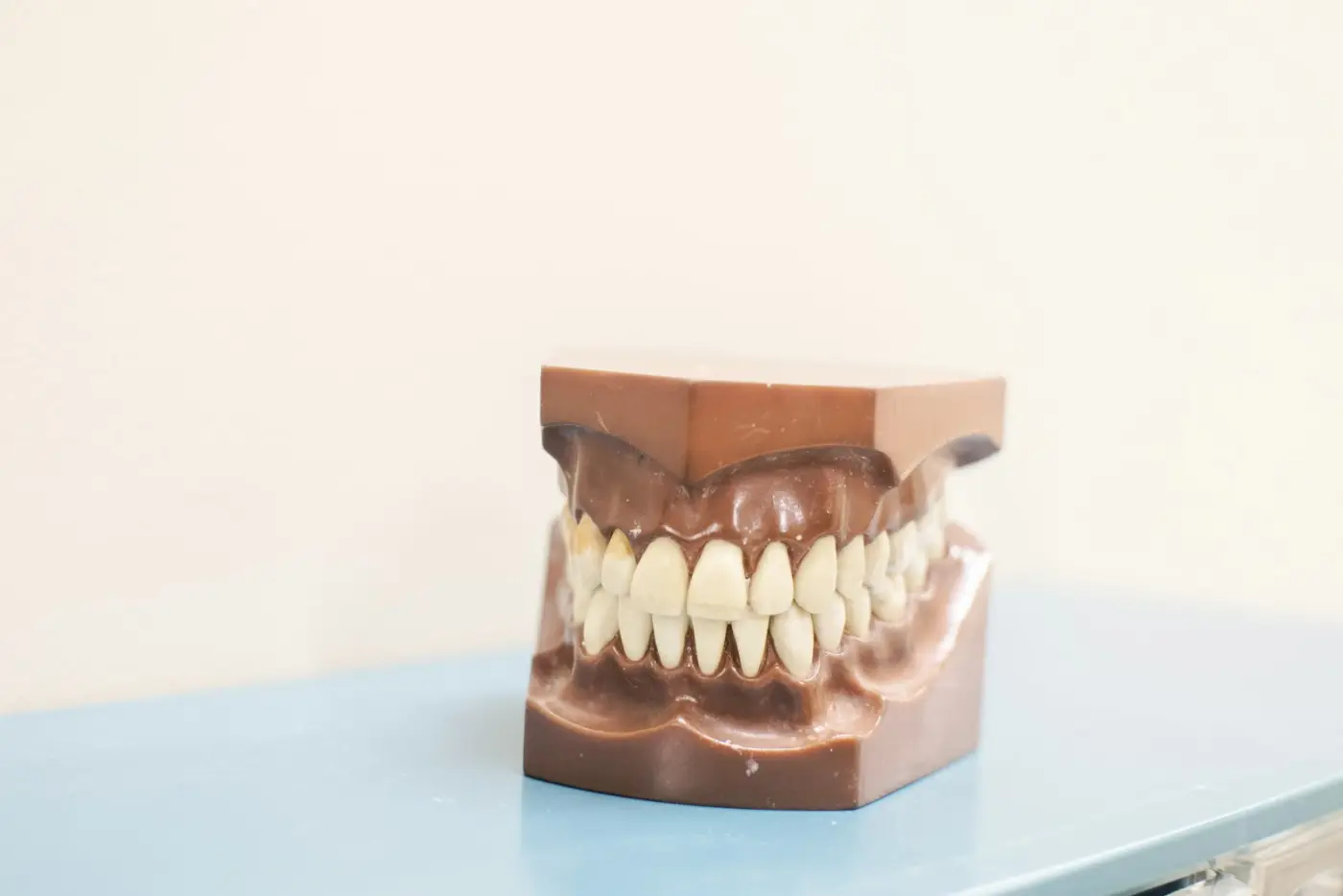
Every FDI number has two digits, and you read them one at a time.
- First digit The quarter of the mouth. Dentists call each quarter a quadrant.
- Adults 1 upper right, 2 upper left, 3 lower left, 4 lower right.
- Babies The same four quarters become 5, 6, 7 and 8.
- Second digit The tooth in that quarter, counted back from the middle.
In Australia that code is the FDI two digit number. So 11 is your upper right front tooth and 48 is your lower right wisdom tooth. The count goes round the mouth like a clock, as seen by the dentist. Adults have 8 teeth in each quarter:
- 1 central incisor, the big front tooth
- 2 lateral incisor, next to it
- 3 canine, the pointy one
- 4 first premolar
- 5 second premolar
- 6 first molar
- 7 second molar
- 8 third molar, the wisdom tooth
Say each digit on its own. Dentists say "three six", not "thirty six". That habit stops mix ups with the Universal system, where 36 does not exist for adults at all.
Sources: FDI World Dental Federation notation and ISO 3950, as summarised on Wikipedia (FDI World Dental Federation notation). ADA schedule, 13th ed., 2022.
Baby teeth numbering chart
Children have 20 baby teeth, five in each quarter.
- In FDI they use the quarter numbers 5 to 8.
- The upper right baby front tooth is 51, and the lower right back baby tooth is 85.
- Baby teeth have no premolars. Positions 4 and 5 are the first and second baby molars.
The Victorian Government's Better Health Channel gives typical ages as a guide, not a rule for any one child:
- Most children have all 20 baby teeth by about age 3.
- Baby teeth start to fall out at about 6 or 7.
- Most people have 32 adult teeth by about 21, wisdom teeth included.
Timing differs from person to person, and only your own dentist can say what is right for you or your child.
For numbering, the point is this: a child aged about 6 to 12 can have both sets at once. So a chart for that age can list numbers like 16 and 55 side by side.
Sources: Better Health Channel (Victorian Government), Teeth development in children. healthdirect Australia, Mouth and teeth.
FDI, Universal and Palmer at a glance
Three systems are in common use, and they name the same teeth in different ways.
| System | Adult teeth | Baby teeth | Where you see it |
|---|---|---|---|
| FDI (ISO 3950) | 11 to 48, two digits | 51 to 85 | Australia, New Zealand, most of the world |
| Universal | 1 to 32 | A to T | Mainly the United States |
| Palmer | 1 to 8 with a quarter symbol | A to E with a quarter symbol | Often in the United Kingdom, mostly by orthodontists |
It pays to know which one a document uses. The full side by side table, with a quick way to convert, is on the FDI vs Universal page.
Sources: Wikipedia, FDI World Dental Federation notation; Universal Numbering System; Palmer notation.
Which way round is the chart?
A dental chart is drawn as if you sit in the dentist's chair and the dentist looks at you.
- Your right side is on the left of the page.
- That is why tooth 18, your upper right wisdom tooth, sits in the top left corner.
- A mirror flips the picture again. Point at a tooth in the mirror and its number will be on the other side of the chart from where you expect.
- If you get lost, find your two big upper front teeth first. Your right one is 11 and your left one is 21.
Using tooth numbers on your own treatment plan
The Australian Dental Association schedule gives each service a three digit item number. Quotes and receipts that follow it show that number, then often a tooth number.
- A line like "531, 36" means a one surface white filling on a back tooth, on the lower left first molar.
- Your health fund uses the same codes.
- The schedule says a tooth number does not apply to an implant, but where its place needs naming it may use the number of the nearest missing natural tooth.
- An extra tooth, called a supernumerary tooth, gets the number of the tooth next to it, with a note that it is extra.
Our guide to reading a treatment plan covers surfaces, item numbers and what to ask. The Decode a plan tab above reads the numbers for you.
Source: ADA schedule, 13th ed., items 531 and the notes on tooth identification.
Tips for checking your tooth numbers
Five checks catch most mistakes.
- Count from the middle, never from the back. Wisdom teeth may be missing, so the back tooth is not always an 8.
- Baby teeth start with 5, 6, 7 or 8, and the second digit runs only from 1 to 5, so 51 to 55, 61 to 65, 71 to 75 and 81 to 85.
- If a number is 1 to 32 with no second digit pattern, or a letter A to T, it is the Universal system.
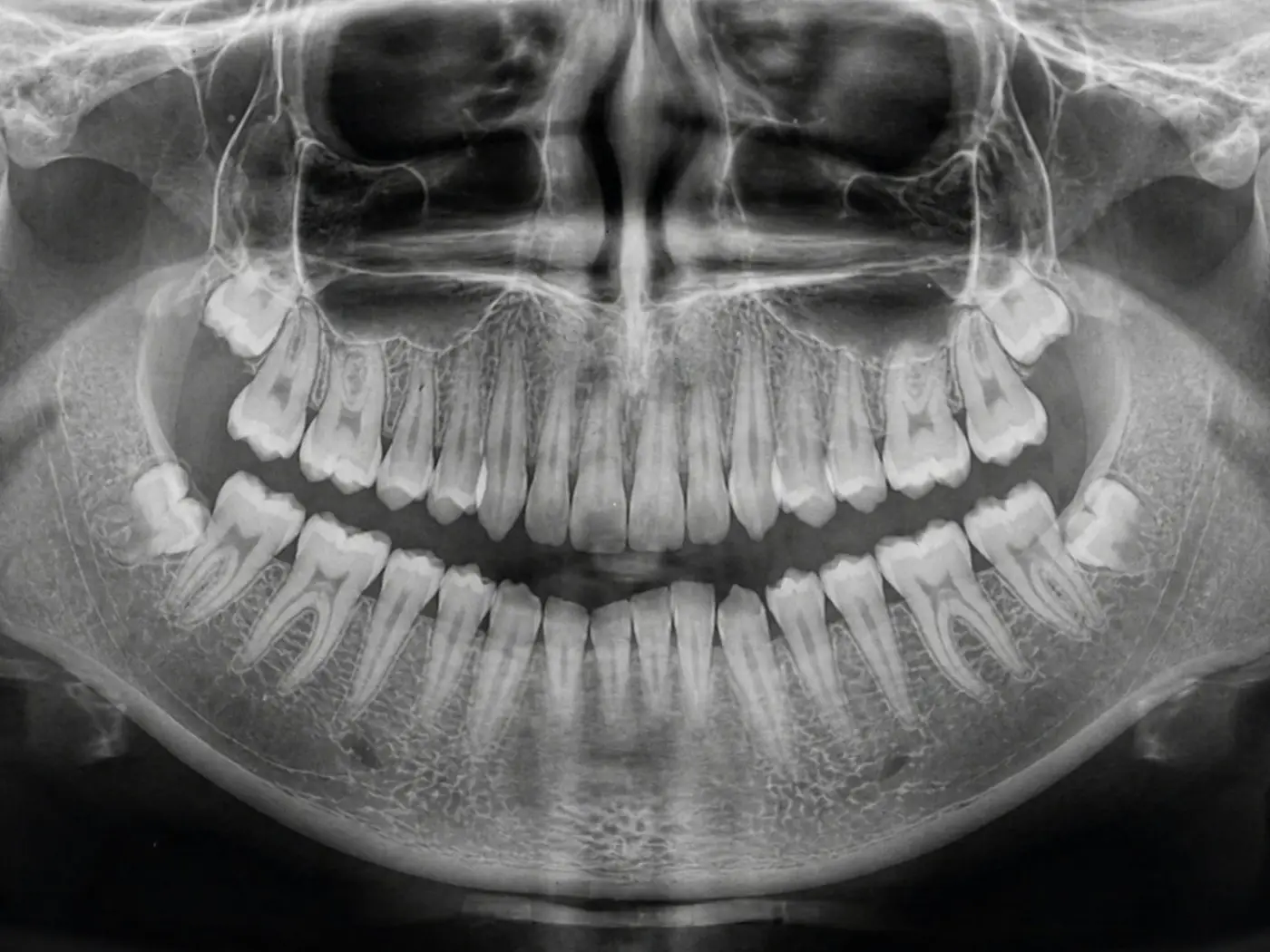
- Before treatment, you can ask your dentist to point to the tooth on a mirror or an X ray.
- Ask your own dentist any question about what a tooth needs. This chart names teeth. It does not say what treatment is right for you.
Missing, extra and wisdom teeth on a chart
Real mouths rarely match the chart exactly, but the numbers stay fixed anyway.
- Taken out. The number does not move to the next tooth. A gap where your lower left first molar was is still 36, and your dentist may draw a cross through it.
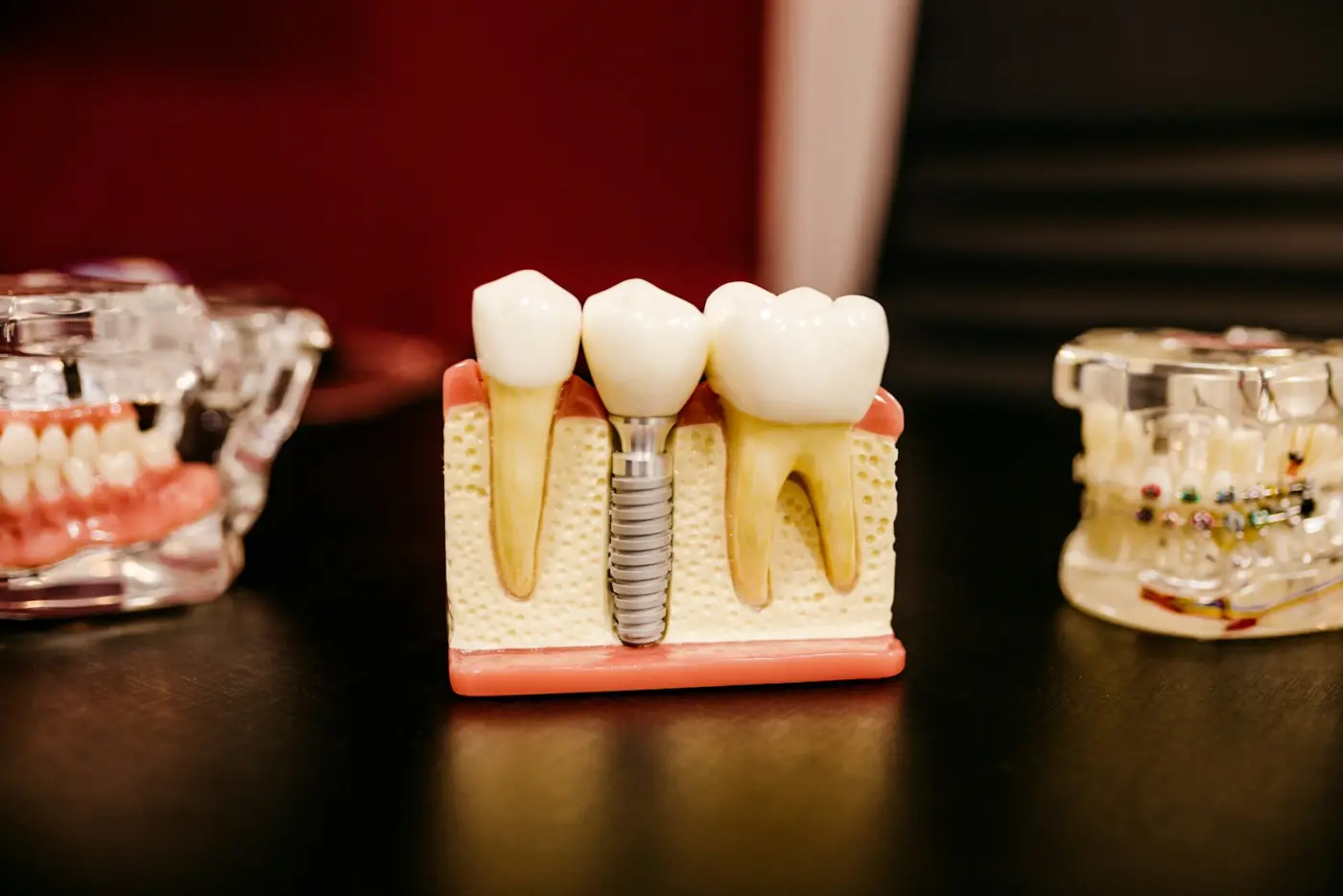
- Implant. If you later get an implant there, the Australian schedule says its place may be described as 36 when that is useful.
- Wisdom teeth. They are always the 8s. Some people never grow one or more of them, so 18, 28, 38 and 48 can be empty boxes.
- Extra tooth. A supernumerary tooth has no FDI number. The schedule gives it the number of the tooth next to it and adds the word "supernumerary".
- Both sets. A child of about 8 may have tooth 11 and tooth 53 on the same chart. Read the first digit: 1 to 4 means adult, 5 to 8 means baby.
Source: ADA schedule, 13th ed., notes on implants and supernumerary teeth.
Printing the chart
Press Print in the tool bar, or use your browser's print option and pick portrait.
- The tables print on plain A4 paper, one table to a page.
- Write your own notes next to each tooth, such as the date of a filling.
- Take it to your next visit.
Reference tables for every tooth
The first table lists all 32 adult teeth. These tables work without the tool above, and you can print them. The Palmer column uses letters for the quarter (UR, UL, LL, LR) because the real Palmer grid symbol does not type well.
Adult tooth numbering chart as a table
| FDI | Universal | Palmer | Tooth |
|---|---|---|---|
| 11 | 8 | UR1 | upper right central incisor |
| 12 | 7 | UR2 | upper right lateral incisor |
| 13 | 6 | UR3 | upper right canine |
| 14 | 5 | UR4 | upper right first premolar |
| 15 | 4 | UR5 | upper right second premolar |
| 16 | 3 | UR6 | upper right first molar |
| 17 | 2 | UR7 | upper right second molar |
| 18 | 1 | UR8 | upper right third molar (wisdom tooth) |
| 21 | 9 | UL1 | upper left central incisor |
| 22 | 10 | UL2 | upper left lateral incisor |
| 23 | 11 | UL3 | upper left canine |
| 24 | 12 | UL4 | upper left first premolar |
| 25 | 13 | UL5 | upper left second premolar |
| 26 | 14 | UL6 | upper left first molar |
| 27 | 15 | UL7 | upper left second molar |
| 28 | 16 | UL8 | upper left third molar (wisdom tooth) |
| 31 | 24 | LL1 | lower left central incisor |
| 32 | 23 | LL2 | lower left lateral incisor |
| 33 | 22 | LL3 | lower left canine |
| 34 | 21 | LL4 | lower left first premolar |
| 35 | 20 | LL5 | lower left second premolar |
| 36 | 19 | LL6 | lower left first molar |
| 37 | 18 | LL7 | lower left second molar |
| 38 | 17 | LL8 | lower left third molar (wisdom tooth) |
| 41 | 25 | LR1 | lower right central incisor |
| 42 | 26 | LR2 | lower right lateral incisor |
| 43 | 27 | LR3 | lower right canine |
| 44 | 28 | LR4 | lower right first premolar |
| 45 | 29 | LR5 | lower right second premolar |
| 46 | 30 | LR6 | lower right first molar |
| 47 | 31 | LR7 | lower right second molar |
| 48 | 32 | LR8 | lower right third molar (wisdom tooth) |
Baby teeth table
| FDI | Universal | Palmer | Tooth |
|---|---|---|---|
| 51 | E | URA | upper right central incisor |
| 52 | D | URB | upper right lateral incisor |
| 53 | C | URC | upper right canine |
| 54 | B | URD | upper right first molar |
| 55 | A | URE | upper right second molar |
| 61 | F | ULA | upper left central incisor |
| 62 | G | ULB | upper left lateral incisor |
| 63 | H | ULC | upper left canine |
| 64 | I | ULD | upper left first molar |
| 65 | J | ULE | upper left second molar |
| 71 | O | LLA | lower left central incisor |
| 72 | N | LLB | lower left lateral incisor |
| 73 | M | LLC | lower left canine |
| 74 | L | LLD | lower left first molar |
| 75 | K | LLE | lower left second molar |
| 81 | P | LRA | lower right central incisor |
| 82 | Q | LRB | lower right lateral incisor |
| 83 | R | LRC | lower right canine |
| 84 | S | LRD | lower right first molar |
| 85 | T | LRE | lower right second molar |
Use or share this chart
You may link to this chart from a class page or a practice blog. Copy this line to cite it:
Tooth Numbering Chart, FDI, Universal and Palmer numbers, toothnumberingchart.com, updated 11 November 2026.
Questions people ask about tooth numbers
What tooth numbering system is used in Australia?
Australia uses the FDI two digit system, also called ISO 3950. The Australian Dental Association schedule says that where a tooth needs to be named, FDI numbers should be used.
What is tooth number 36?
In the FDI system, 36 is the lower left first molar. The 3 means the lower left quarter of the mouth, and the 6 means the sixth tooth back from the middle. In the Universal system the same tooth is number 19.
How many teeth does an adult have?
Most adults have 32 permanent teeth, counting the four wisdom teeth. Many people have fewer, because wisdom teeth may never come through or may be taken out.
How are baby teeth numbered?
In FDI, baby teeth use quarters 5 to 8, so they run from 51 to 85. A child has 20 baby teeth. In the Universal system they are letters A to T, and in Palmer they are letters A to E in each quarter.
Why does my chart look back to front?
Dental charts are drawn as if you are facing the patient. So the patient's right side sits on the left of the chart. Tooth 18 is on the far left of the top row.
Do tooth numbers change if a tooth is taken out?
No. Each number belongs to a place in the mouth, not to the tooth itself. If tooth 46 is removed, the gap is still called 46.
The Australian Dental Association schedule says implants have no tooth number of their own, but when their place needs naming it may be given the number of the nearest missing natural tooth.
Are wisdom teeth always number 8?
Yes. In FDI and Palmer, the wisdom teeth are always the 8s: 18, 28, 38 and 48. In the Universal system they are 1, 16, 17 and 32.
I have a dental quote from overseas. Which system does it use?
Many countries use FDI, but plans from the United States use Universal numbers. Check whether the plan has two digit numbers like 36 or numbers from 1 to 32.
If you're holding a treatment plan with tooth numbers on it, Dental Link (dentallinkvn.com), a free dental concierge, turns it into two written quotes from vetted clinics in Vietnam.
Those points come from Dental Link's own home page:
- no charge to patients,
- 18 published checks before a clinic is listed,
- and two quotes in writing.
This chart does not rank clinics itself, and a payment to this site can follow if you then choose Dental Link.